

018 Adam Whelband
A Coin Under the Lift Threshold: Adam Whelband on Restoring the Building He Once Studied In
Adam Whelband studied a general Art and Design BTEC at Frederick Street from 1992 to 1994, in what's now the cafeteria, before a career path that took him through product design, brickwork and eventually construction. Nearly thirty years later, his groundworks firm was subcontracted onto The Generator's restoration, and he found himself walking back into the same building he'd once studied in.
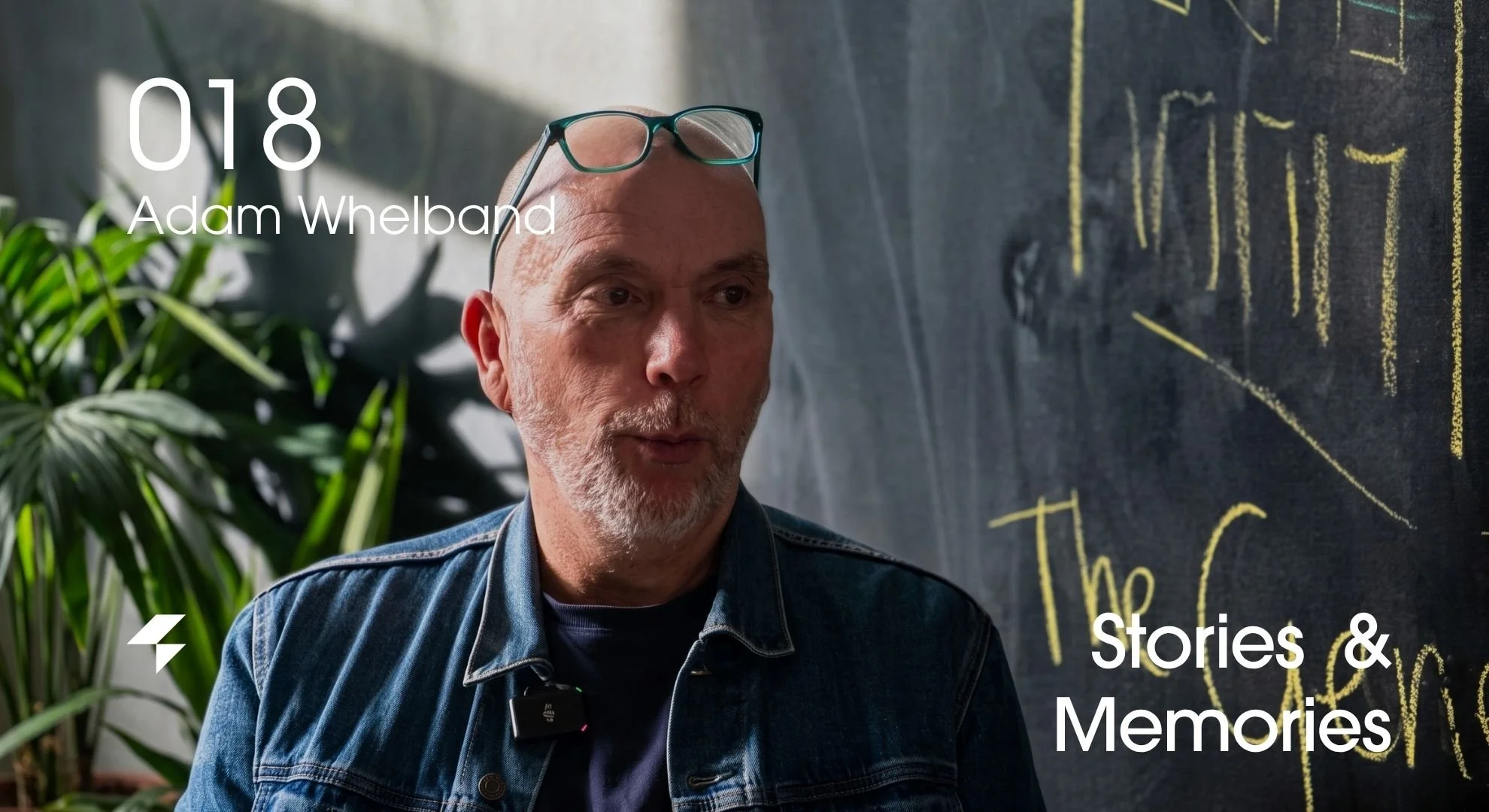
How did it feel coming back to the building after all these years?
Adam: When the site address first flashed up as Frederick Street, I was quite excited, I recognised it straight away. Walking back in after well over thirty years, all those memories came flooding back. It was really good.
Your career took a fairly unusual path to get you there.
Adam: The diploma at Loughborough was really varied, model making, photography, graphic design, general art and design. We had a college trip to Paris, and walking round that architecture sparked something in me. I went on to study product and furniture design at Nottingham Trent, but for various reasons that didn't quite work out, so I decided it was time to get a proper vocation. I loved design and architecture, but didn't think I was quite bright enough for a seven-year architecture degree, so I plumbed for the next best thing and trained in brickwork at Leicester College instead. That led me into construction, and it's come full circle now, back at the building where I learned a lot of those original design skills.
What kind of work has your firm actually done on the building?
Adam: We started with enablement work in May 2023, demolishing walls, doing survey holes to check floor thickness, helping the structural engineer compile reports. As the project developed we ended up doing all sorts, fitting staircases, constructing the lift shaft, sewer connections out in the road, and the basement works, which were a huge challenge because of water ingress.
Tell us about the water problem.
Adam: There's a brook running through the park nearby, and one of the building historians told us the reason the water ingress was so bad is that they used to deliberately harness that water into a sump when the generators were running, to pump and cool them. So they'd basically invited the water in a hundred years ago to make use of it. Fast forward to now and we're trying to keep it out instead. We've fitted delta membranes, a kind of industrial bubble wrap, and it's bone dry down there now.
What was it like handling the more delicate heritage elements?
Adam: Genuinely painful sometimes. The black and white tiles were a striking feature, and it felt almost criminal taking them up, but they were so well stuck down they wouldn't come up in one piece, which is testament to the original builders. One odd tile that did survive is stamped on the back with the maker's name, a Victorian tile manufacturer from Birmingham who also made tiles for the old Trinity Stand at Aston Villa, demolished in 2006. We also found old graffiti during demolition, one name and date, "J. Wootton 1941", scratched into concrete near an old service hatch in the basement, still visible. There's more graffiti up on the cafeteria gable end running up to around 1971, and some on the wall along Packe Street too. Hopefully all of that stays on view.
How does this project compare to other heritage jobs you've worked on?
Adam: Sometimes heritage projects get overly precious about keeping things, to the detriment of actually being able to use the building. Here, I think they've struck a great balance. Where it needed opening out, it's been opened out, but the guy who maintained those generators a hundred years ago could probably still walk in and recognise most of it, which is testament to the architect's approach. Even the whitewash on the walls has been kept and just brushed back rather than repainted, which really lends itself to the industrial character of the place.
Tell us about the coin under the lift.
Adam: We built the lift shaft from scratch, breaking through the ground floor into what turned out to be an old service void, roughly a metre and a half deep, that used to carry pipework feeding the generators' water and fuel. Underneath that we found crushed brickwork from what I think was slum housing on the site even before The Generator building, and evidence of a wooden shed structure from around 1926, concrete stanchions with reinforcing bar that the timber building would have stood on. When we got near the top of the lift shaft, I remembered an old tradition from private housing jobs, joiners and builders would place a coin of the era above a doorway as a blessing for the building and everyone who passed through it. So I placed a pound coin, dated that year, under the last block in the bed joint above the lift door thresholds. It's not a proper topping-out ceremony, but it's up there now, hopefully blessing the building and everyone who rides that lift.
Watch the Interview
Interview: 018 | Interviewee: Adam Whelband | Recorded: 05.12.2025 | Duration: 16 minutes | Recorded at: Institute Research Lab, Loughborough | Series: Stories & Memories
Anything else stand out about the quality of the original build?
Adam: When we set out the pad stones for the new mezzanine floor, we fired a laser right across the building, the best part of thirteen or fourteen metres, to mark the datum line. There's no proper concrete foundation under that building at all, it's what's called a spread foundation, just brickwork on clay, and after nearly a hundred years, with generators and engines vibrating away in there for decades, it came out less than two millimetres out. That's testament to the quality of the original workmanship. Nowadays everything sits on modern concrete foundations, and it makes you wonder what they knew back in the 1930s that's since been forgotten.
Do you think you'll come back once it's open?
Adam: Definitely. Funnily enough, one of my old Foundation projects at Frederick Street was on transport, cars and motorbikes, and it got me into old Lambretta scooters. Years later I had five of them, got into the scooter scene, which led to collecting vinyl and DJing. So the ultimate full circle for me would be playing a set on that stage, soul, Northern soul, Motown, reggae, a bit of punk.
With thanks to Adam Whelband for sharing his memories as part of The Generator's Stories & Memories oral history project
