

011 Yanina Temple
We caught up with textile lecturer Yanina about four decades teaching in the building, from its Frederick Street days through to its transition to the campus based Foundation Course
Yanina first taught in the building in 1982, as a part-time member of staff alongside a couple of other young women. She stayed until 1984, when the roles were cut for cost reasons. She reapplied in 1991, was offered part-time work teaching textiles, and went on to teach there until she retired in 2020, moving with the course from Frederick Street to Epinal Way along the way.
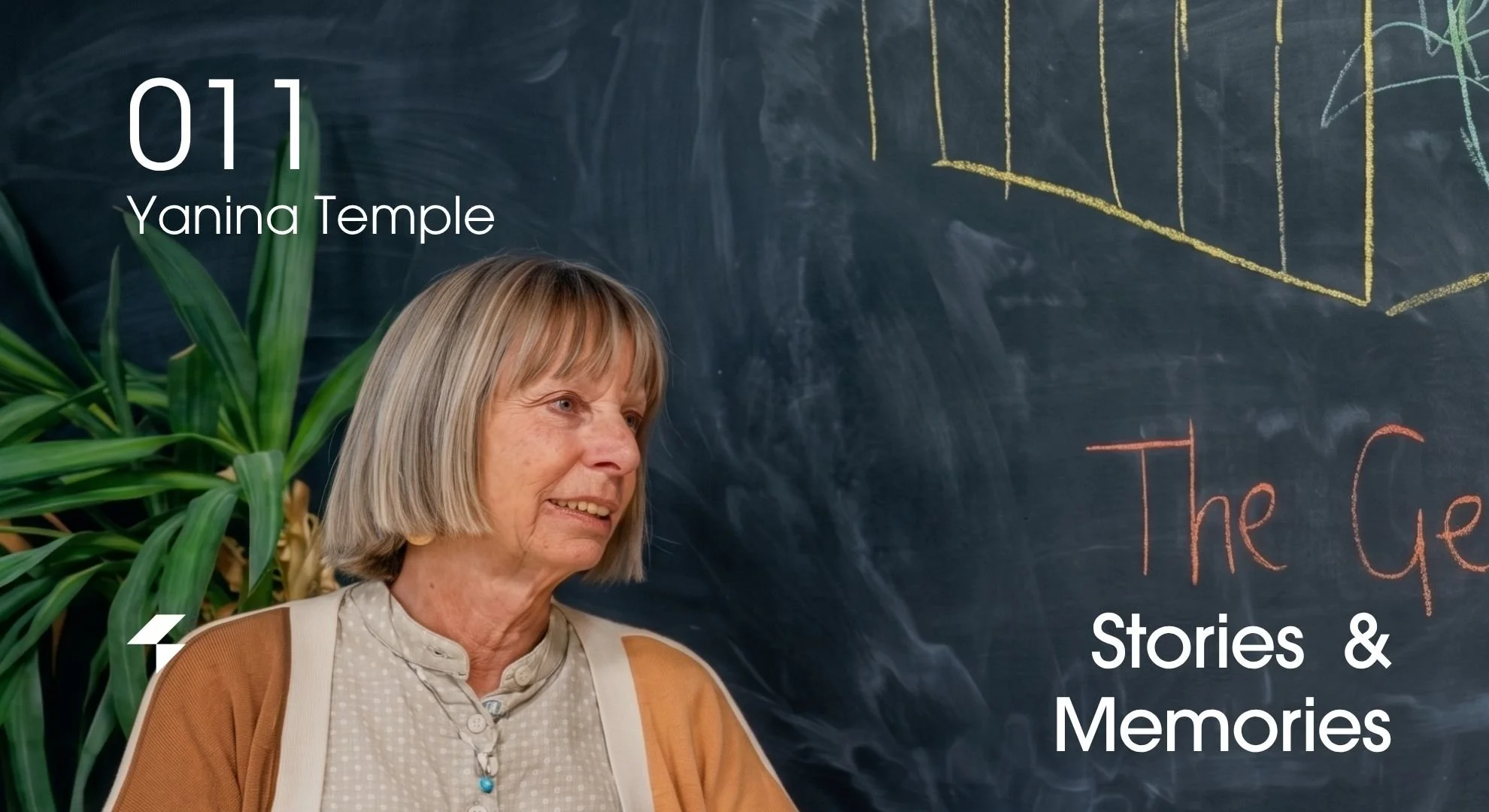
You taught there twice, years apart. What was it like going back?
Yanina: I was there basically until we moved from Frederick Street up the road, until I retired in 2020. It was very sad to leave, because it was such a fantastic building. We were autonomous really, even though we were obviously connected to the college. We had 3D workshops, print studios, a dark room, we had everything. It just felt as though we were, I don't know, very special.
What was it actually like to teach there?
Yanina: There were about 150 students, which was a lot, and they were divided onto different floors rather than by specialism. So on one floor you could have potential graphic designers, fine artists, textile designers, whoever, and you were expected to teach all of them. My background was woven textiles, but I was expected to teach fine art, graphics, 3D. It was tough, and I had no teacher training at all. We just plunged in.
Was there anyone who particularly shaped how you taught?
Yanina: Pat May and John Downer were exceptional, and I learned so much from Pat. Her drawing skills were exceptional. She'd have students doing one life drawing for at least four days. One drawing. You had to get it right. She'd come along, point things out, and if it wasn't right it had to be worked on and moved forward. She laughed all the time. She taught me so much, and all the students loved her.
The building had some unusual teaching set-ups, didn't it?
Yanina: John Downer was responsible for the chickens, which lived in pens on the roof. He'd bring them down to the top floor, the students would sit in a circle with no gaps between them, and he'd release the chickens in the middle for the students to draw. Wonderful drawings came out of that. John lived in Manchester but was full time, so rather than commute he lived in a camper van in the car park, winter and summer. Occasionally someone would offer him a place to stay for the night, but generally he slept in the van and looked after the chickens. He was extraordinary. Very dedicated.
Any other memorable projects?
Yanina: Students would bring in an uncooked egg and have to make something to protect it, then climb to the top floor, out onto the roof, and throw it off the side of the building to see if it broke. If it didn't, the project hadn’t worked. Projects were sometimes given as a single word, "flight," that was it, and off you'd go. Students really had to think about what they were doing and bring their own ideas to it. As things became more structured, with GNVQ and BTEC programmes, the projects had to be written up formally, and we all rebelled a bit when computers came in and we suddenly had to type our own work.
There was also a period when textiles and fashion were based in the gallery space, what's now The Generator. It was an awful space to work in: freezing cold, with infrared heaters mounted so high the top of your head would burn while your feet stayed frozen, and light switches you had to climb a ladder to reach. The acoustics were appalling too. If you had a central drawing set-up with students round the edges, you'd have to walk to every single student to repeat yourself, because wherever you stood, someone couldn't hear you. Sometimes you'd have to go halfway up the stairs to the old mezzanine and shout for quiet before the whole room could hear you.
Any stories that still make you laugh?
Yanina: One that still makes me laugh, and one that doesn't. A visiting artist filled the gallery with red maggots as part of a show, and was thrilled with it. He packed up and left, and when we came back mid-summer, the room was fly-ridden. He'd left too many maggots behind and they'd all hatched. It was disgusting. From that point on, we banned anything alive from the building, which was the end of the chickens too.
And there was the student who applied to Saint Martin's with very little work to show for it. John Downer sat him down in front of the whole class, held up each piece one at a time, and asked the room "in or out." Anything that was out got torn up on the spot. The student was left with about six pieces. He got into Saint Martin's, and went on to do quite well for himself.
Watch the Interview
Interview: 011 | Interviewee: Yanina Temple | Recorded: 08.10.2025 | Duration: 18 minutes | Location: Institute Research Lab, Loughborough | Series: Stories & Memories
Any that surprised you more than amused you?
Yanina: We once found that someone had been living in the building. A mattress and supplies, in one of the rooms. I couldn't tell you where now, it's all changed so much.
How does it feel seeing the building now?
Yanina: It's transformed. It's hard to even work out what it used to look like. I think you're doing an amazing job, and I'm so happy it's being used again. It's about time Loughborough had an arts hub, it's a big town and it should have something, and it's central, and it carries on the history and legacy of that building.
Any thoughts on what it should become?
Yanina: I think keeping it broad in terms of the art is important. An exhibition of alumni work, people who actually studied or worked in that building, could be really interesting. But as a hub for as many people as possible, young, old, everything in between, films, theatre, events, exhibitions, music, that would be wonderful. I feel it's going to happen.
Do you have any photographs or memorabilia from your time there?
Yanina: I've got photographs of members of staff, and a series of images I took of students' work, probably from the 1980s. Some of the life drawing, when you consider these were foundation students, is exceptional.
With thanks to Yanina for sharing her memories as part of The Generator's Stories & Memories oral history project.
