


24 April — 29 May 2026

Artists and artworks
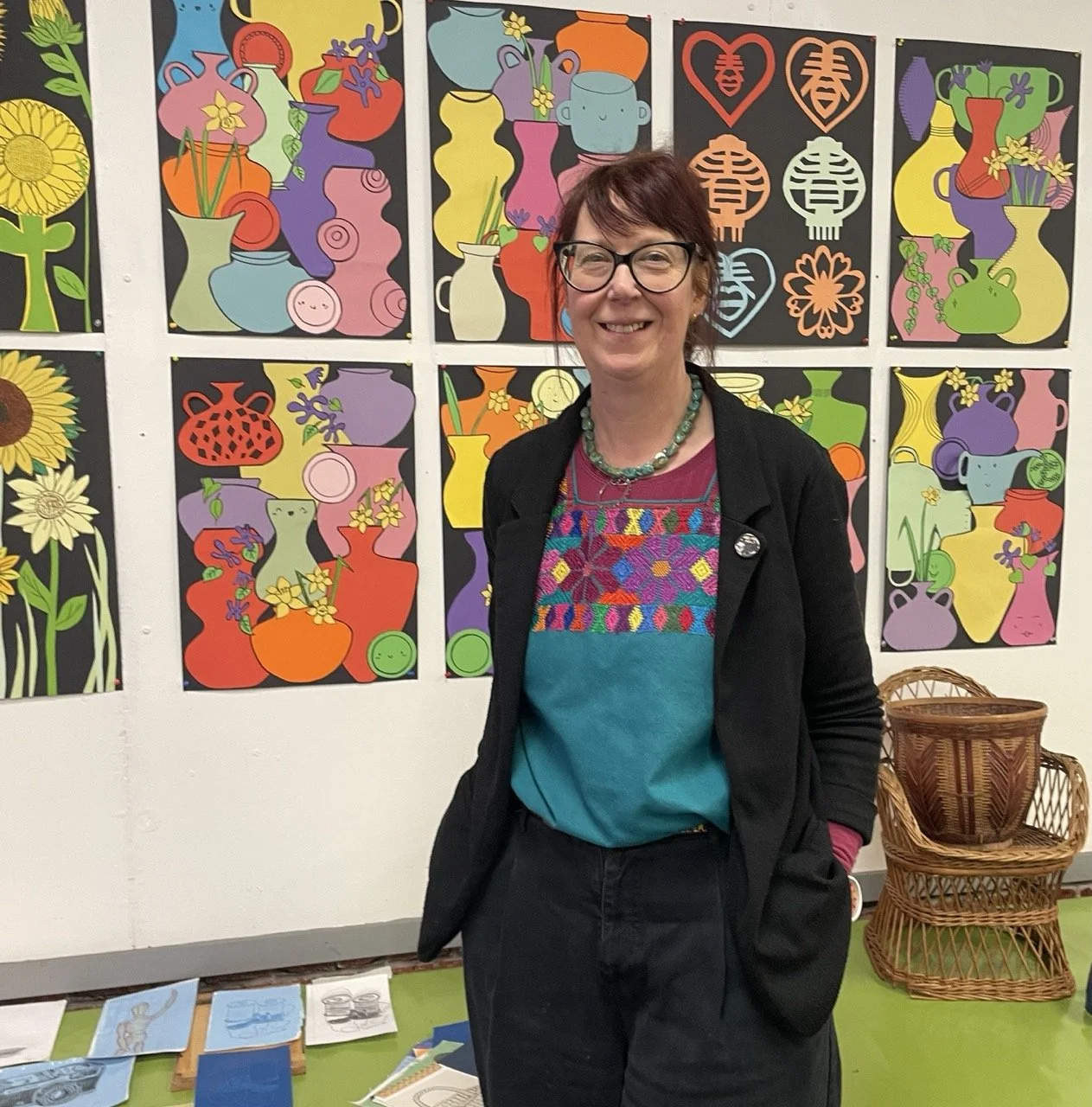
The motifs used on these co-produced banners were created during workshops at Loughborough Wellbeing Centre. The Creative Café, Stitching Well groups and
the LGBTQ+ youth club all took part. Inspired by past activities in the Generator building, its links to local industry and creative practice, including car mechanics, studio pottery, life drawing, dressmaking, basketry and photography, participants drew items from still life and from photographs.
These were done onto painted papers using coloured pencils and through dressmaker’s carbon paper. They also took impressions using plasticine from items like baskets and printed them with ink pads to form patterns. Images of items were scored into Tetra Pak plates which were then printed with Prussian Blue intaglio ink. The colour palette used throughout, has been carefully chosen to reflect the building, both past and present. The resulting images were scanned and printed digitally onto canvas fabric which was then cut and stitched into the finished banners.
Artist: Jemma Bagley
Jemma Bagley is an East Midlands based artist and arts facilitator. Her specialism is working with adults to nurture wellbeing through creativity. She has over 30 years of experience and has worked with the NHS, Loughborough Wellbeing Centre and is a regional facilitator for Outside In. She is also a volunteer at Studio At 17 and The Tangent gallery, a project based in Loughborough that provides a studio space and exhibiting opportunities for adults with long term and enduring mental ill health. She utilises drawing, collage, printmaking, and textiles in her socially engaged practice and centres co-production, agency and inclusion in her approach. Jemma’s own creative practice explores themes of connection and belonging which can appear as landscapes and she also writes short stories based on autobiography and overheard conversations and she also makes Zines.
Artist bio
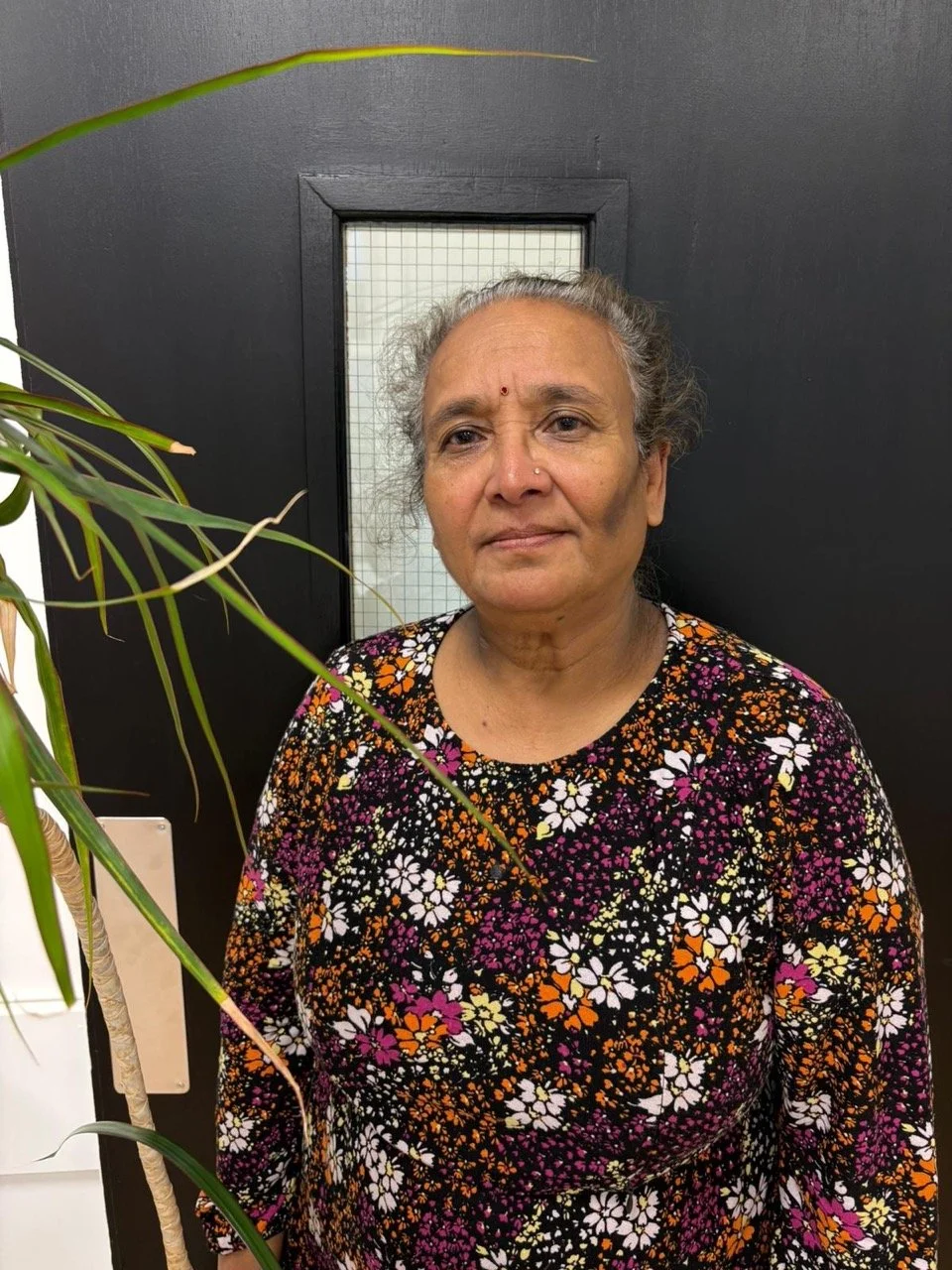
Purnima Chavda works across printmaking, drawing and textiles, often drawing on family photographs, personal history and the saree as a motif. Influenced by her travels and cultural experiences, she creates work shaped by memory, environment and connection across generations.
Artist: Purnima Chavda
‘Through our journey, we come back and leave memories and guidance from above. We keep within us the woven fibres that bind us together, and the ancestral threads are kept alive through generations gone by and still to come.’
These saree sculptures are made with inherited and family sarees, passed down through generations, and the artist’s own sarees from key moments in her life.
Artist bio
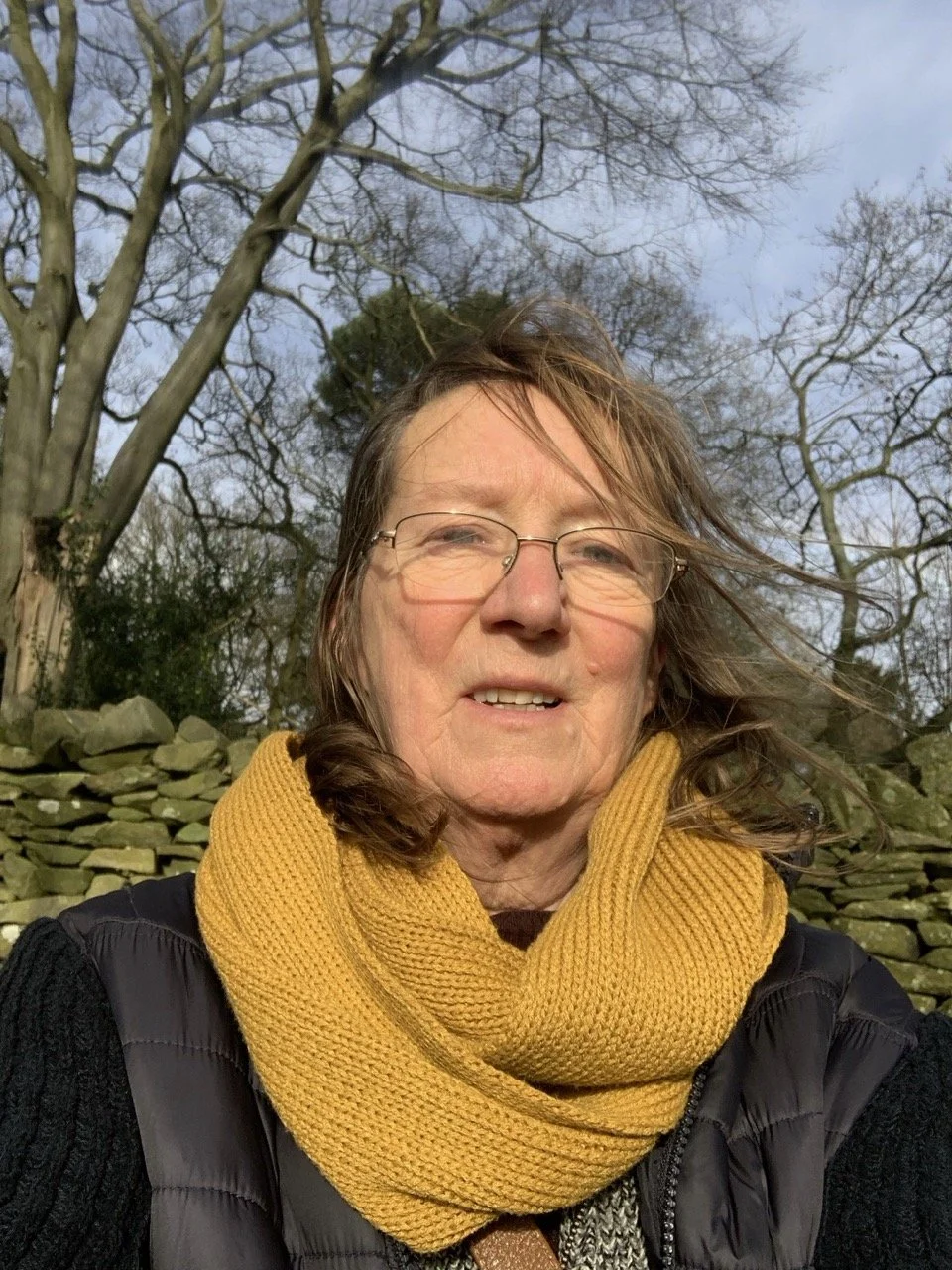
Steeped in the traditions of many basketmakers long-gone, the willow baskets have a contemporary vibe. Sometimes utilitarian but always inherently beautiful by the nature of their material – the gift from nature, reformed for lasting admiration. The allure of the stems stalks and leaves, pliant enough to be woven is something that has stayed with me throughout my life. I share my life with the materials as they need constant attention, whether it be seasonal gathering, or the soaking mellowing preparation, or drying the twigs.
Designs such as duck nests, beehives and birdcages influence the forms and techniques of the pieces. The basket forms made from machine and hand cut willows and rushes harvested from fields and rivers, invoke a deep connection with nature.
Artist: Maggie Cooper
After leaving school I studied Basketmaking at Bournville College of Art. On a career journey leading from my interests in the natural world, art and social history, I learned methods of basketmaking to explore these subjects, bringing to life long forgotten designs, for example wattle and daub beehives, fish traps and model dwelling places, besides practical baskets.
I like to investigate the woven form in sculptural pieces. I make conceptual work as well as my specialty of life-sized horses in willow, trees for community spaces and even figures all made without armatures. I recently made a film merging music and colour to show the beauty of the entangled willow rods which formed a horse.
Based in the East Midlands, a place where there was once a thriving basketmaking industry, is a fitting backdrop for my research, some of which can be seen at the “Everyday Lives at War” University of Hertfordshire website.
I like to work with materials which I collect, and for many years I have been interested in using willows which have been specifically grown in my area for the craft. Over the years I have shared my knowledge and skills with many people through demonstrations, workshops and talks, inspiring others to keep this very special craft alive today.
Maggie Cooper
Yeoman Member of the Worshipful Company of Basketmakers
Freeman of the City of London
Artist bio
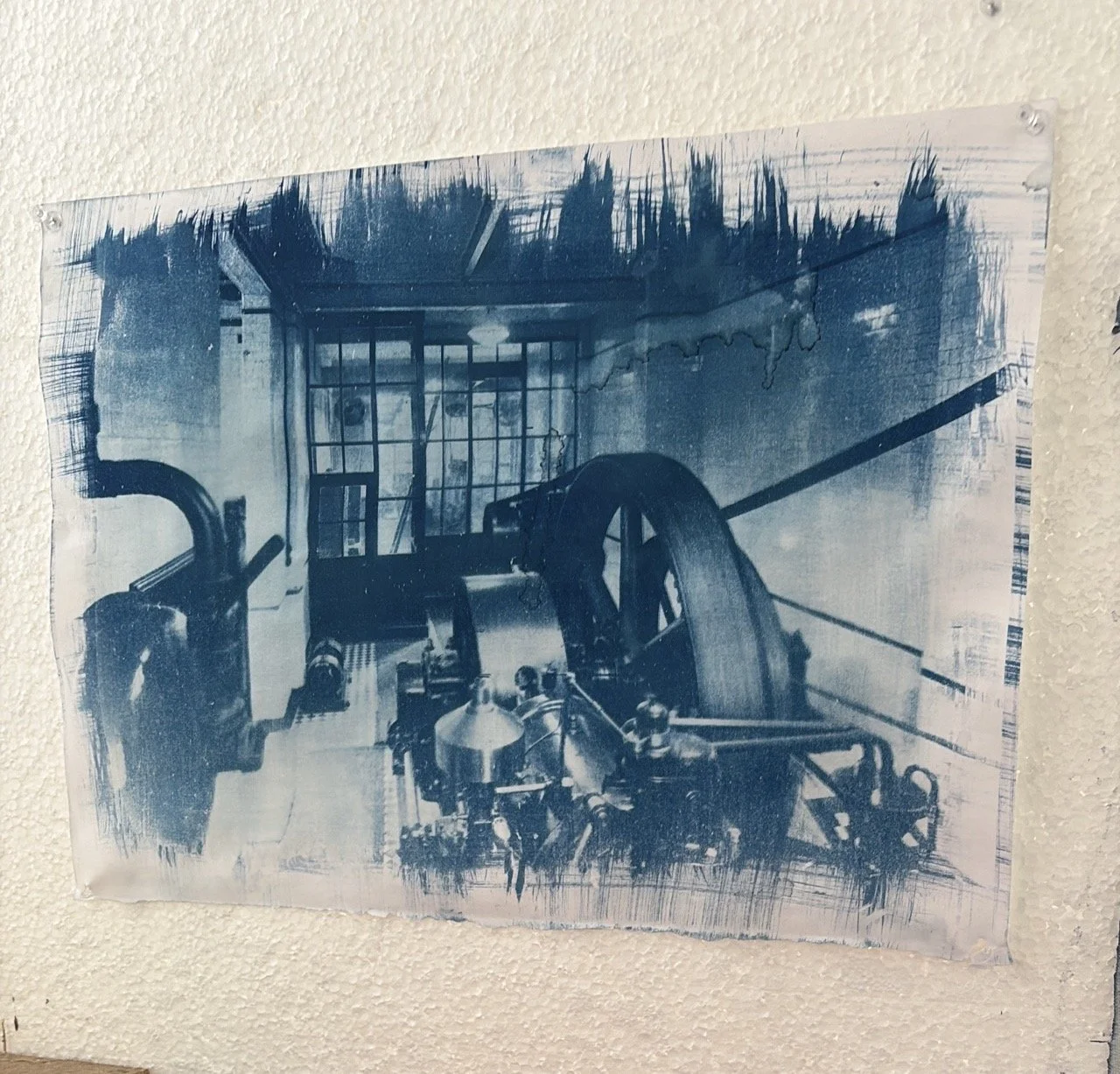
Artist: Loughborough Foundation in Art & Design Students
This collection of cyanotypes was created by Loughborough University Foundation in Art & Design students, coordinated by Dr James Chantry. He is an artist, writer and academic who has published and exhibited internationally.
“Foundation began in the Generator and the OAC in the 1950s and is an experimental and transformative experience for students. This group of students with a particular interest in the cyanotype process have explored with James, the psychogeography of the Generator, hauntology and spectrality through an experimental, historical and industrial process of image making.” Dr James Chantry.
Archival images provided courtesy of Loughborough University Archive. ©Loughborough University Archive
Artist: Loughborough Foundation in Art & Design student
Title: Generator Image provided courtesy of Loughborough University Archive
Title – Cyanotype
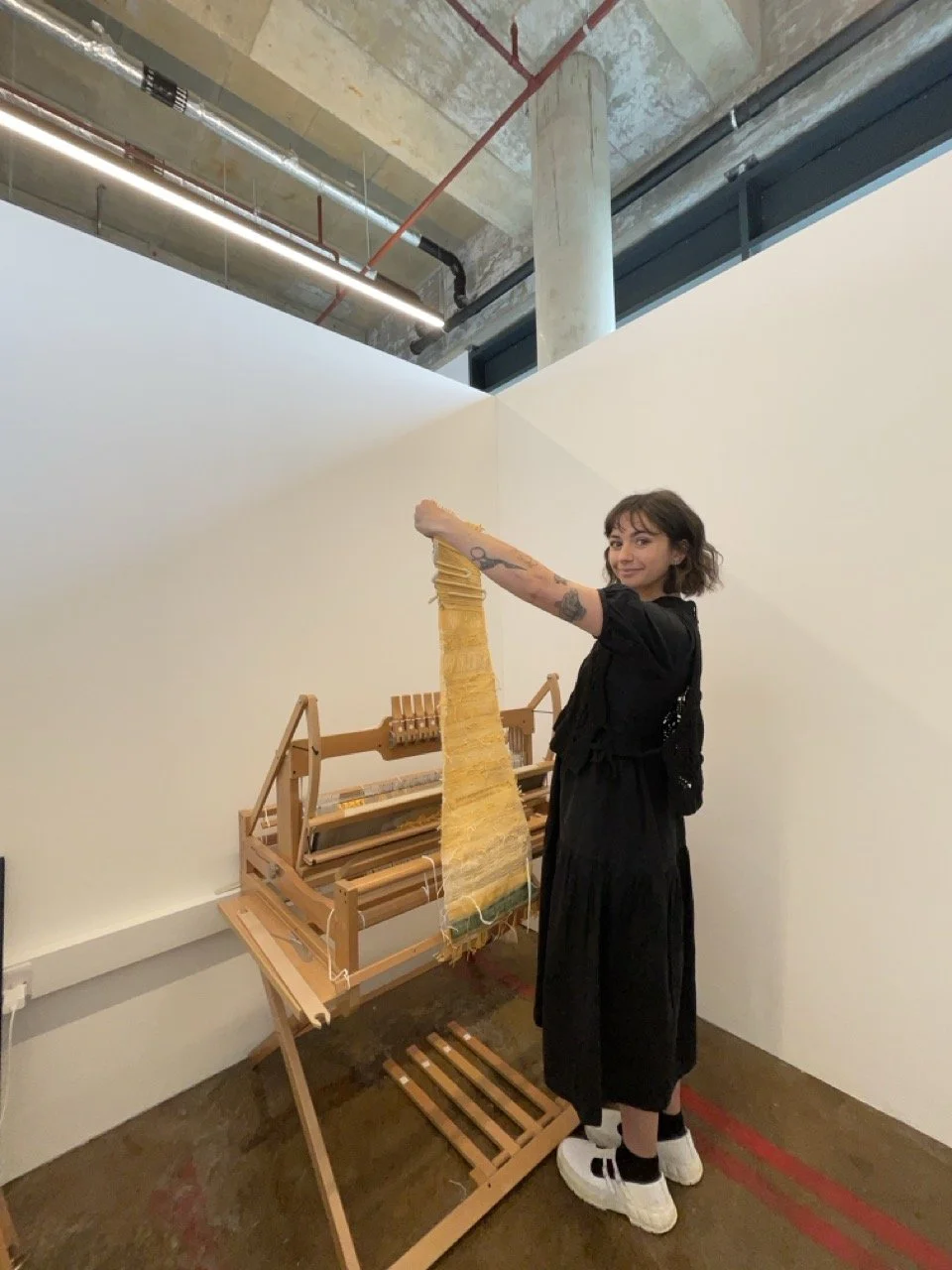
Beth Lukockyj is a multimedia artist working primarily with textiles. Her practice draws from traditional craft techniques, including weaving and stitching, to explore how emotion and memory are embedded in material. There's a sensitivity to layering, repetition, and surface - where meaning is built up through time, texture and quiet intervention.
Artist: Beth Lukockyj
The works presented are a series of handwoven textiles that explore emotion and memory through the use of text. While the starting point often comes from my own writing at the time the pieces are intentionally open ended, inviting viewers to form their own interpretations and connections.
The larger piece functions as a kind of storyboard of ideas or textile drawing, bringing together text, colour imagery, and texture. It features an overshot inlay throughout, created using a name-drafting technique in which a chosen word or phrase is translated into a decorative pattern acting almost like a hidden message. These textures acting as subtle, embedded messages create a different visual outcome that isn’t always known or obvious to the viewer and explores a different way to how language can be used.
Smaller hints of colour appear throughout the work, referencing my dad’s photographs from specific times and places that hold personal significance and memory, moving towards a quiet sense of collaboration and continuation
Artist bio
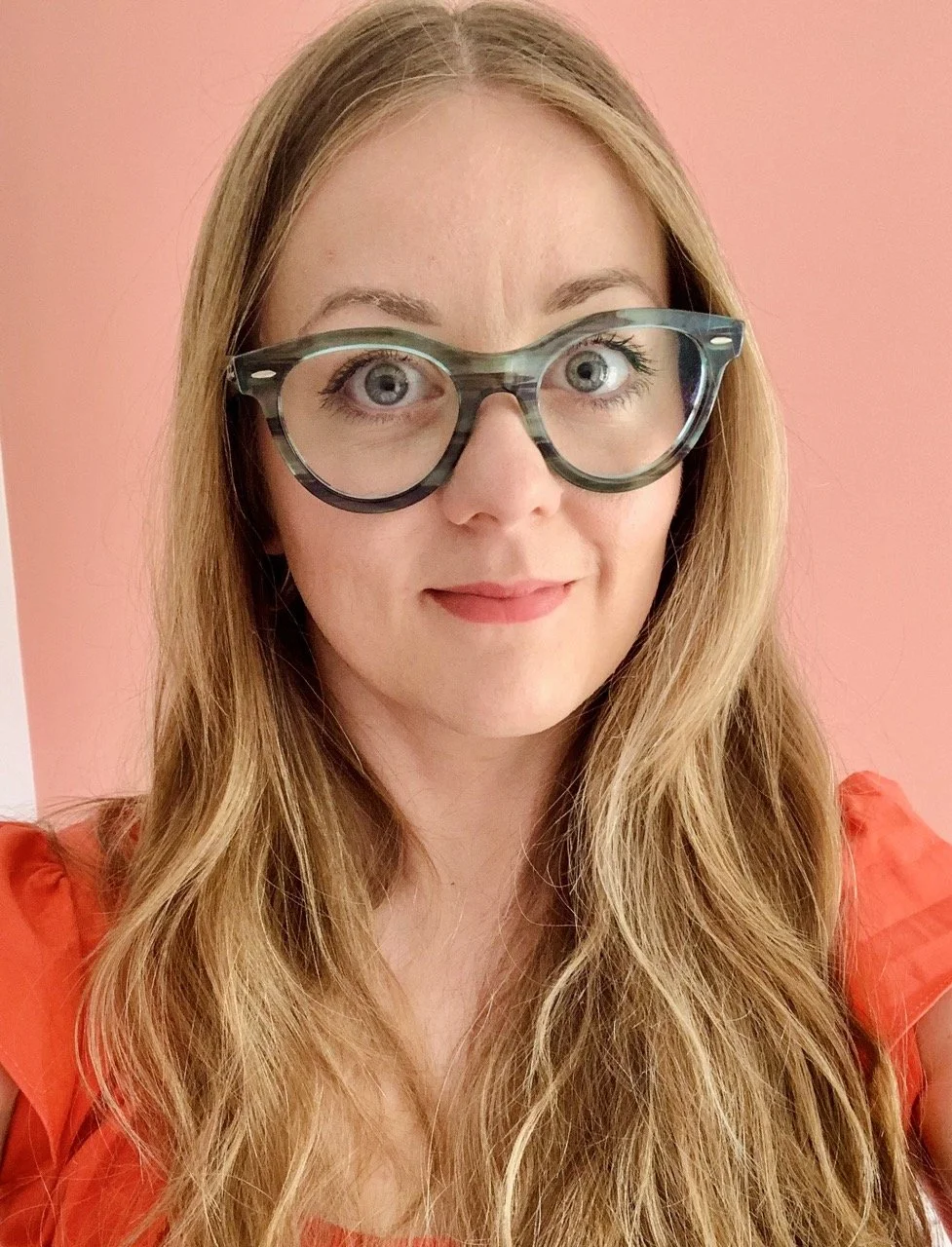
Hannah is an educator and passionate knitter based in Derbyshire. Sustainability is central to both her creative practice and her teaching on the Art and Design Foundation course. She knits daily, finding in the rhythm of hand knitting a sense of calm and a meaningful connection to her heritage. Committed to responsible making, she prioritises the use of locally produced and hand dyed yarns whenever possible.
Artist: Hannah Money
Artist bio
Hannah works with locally produced and ethically sourced yarn. The yarn for these socks was hand-dyed in small batches by WeaveKnitIt, based in Cromford, Derbyshire.
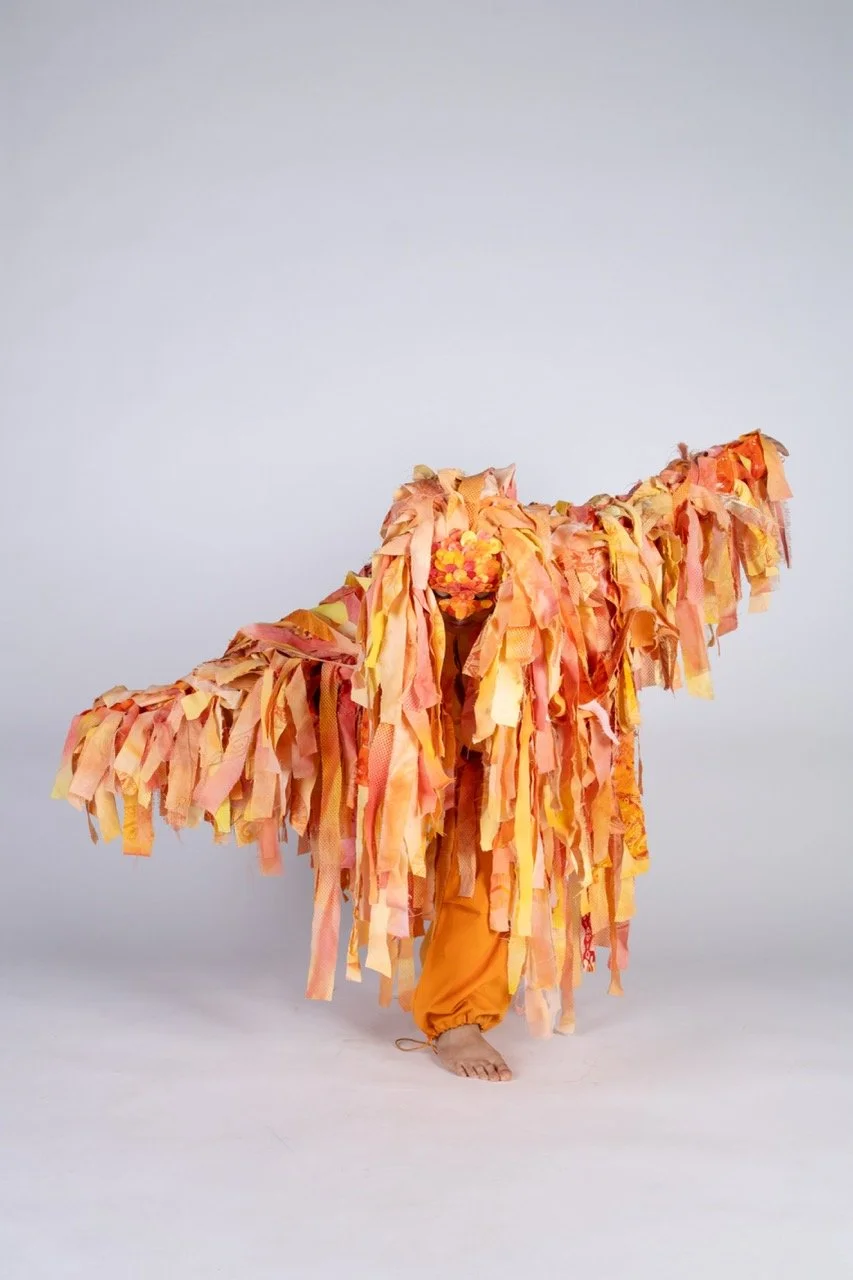
Donna Sharmaine Juval Gatdula is a multimedia disabled performance based artist exploring the nuances of her being a second generation queer Filipina and the impacts of it on her spiritual and physical identity. She is interested in preservation and exploration of pre-colonial practices and beliefs not just from the Philippines but globally. Donna Sharmaine champions queerness, diversity, and inclusivity. Moving from London to Nottingham after graduating from Loughborough University she is currently part of Nottingham Contemporary's young people's collective 1525. The influence of club culture and freestyle dance has heavily impacted her understanding of human connection and way of living. She aims to build her creative career on social engagement, awareness, and celebration.
Artist: Donna Sharmaine
My performance is a physical result of the exploration of my spiritual identity as a second generation Filipina. The piece “ These Four Years ” marks the start of this journey. I believe my Anito (ancestors) speak to me directly through movement, sound and signs. Throughout my personal journey it has led me to understand that practices such as dance, sound, mask, fabric, and pattern creation are shared through many cultures and people.The creation of my costume began at the exploration of Batok ( indigenous Filipino tattooing. ) Each strip is hand made, painted, printed, and cut. A personal rhythmic ritual, the process of tatak (engraving). Activated by my spirit through my freestyled movement, my costumes and performances function as a site for spiritual exploration for both ancestral and contemporary connection.
Artist bio
Photo Credit: Nyklaus Thorn
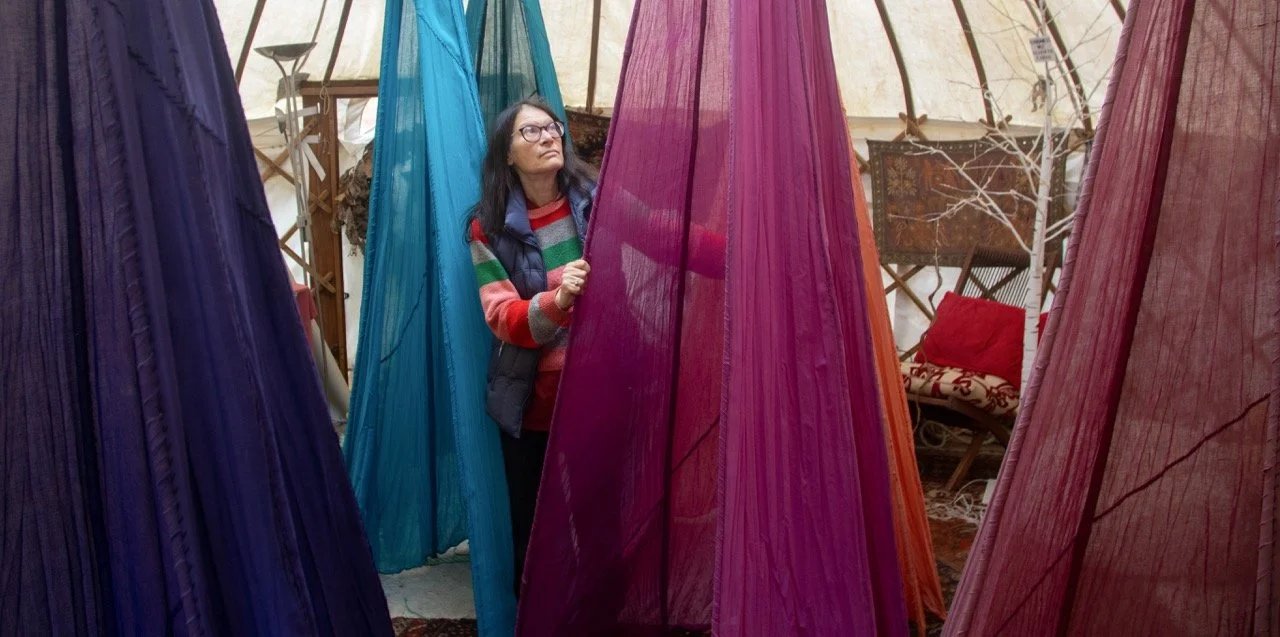
Forest Path – Within the Roots
This installation has now evolved over many years, starting in 1997 after time travelling in India.
Using the colours of India with vibrant turban material, faded now over the years. A forest of colour where different realities are possible.
My way of working involves symbolic thought processes, the symbols evolve and join to create new meaning. Revisiting ‘Forest Path’ for ‘Our Very Fabric’ has given me the opportunity to combine my original ideas with where I am now. The result has become even more of a journey of our very being with the combination of outer realities alongside inner realities.
Finding the time for wrapping with colour and slow sewing, like willow weaving has given time for slowing down. This in turn giving time for reflection, to process thoughts and that sense of mending as an act of healing. Symbolically untangling ideas and thoughts, as rushing causes only tangles.
Then and now our world appears to be chaotic and out of control, especially in contrast to being closer to nature and living in the present in India, and more recently creating work in nature. I try to convey both these realities.
I think of my work as poetry, an exploration into the unknown. Maybe the spheres are symbolic of seeds and new beginnings, or our soul contained within the fabric of our body. I don’t know yet.
Artist: Nita Rao
Nita Rao is a visual artist known for her work with sustainable and waste materials, inspired by the cycles of decay and renewal of, as well as climate emergency. She is the lead artist on the Up To The Beacon Sculpture Trail, which emphasises the beauty of nature and the importance of climate change.
Nita studied Fine Art Sculpture at Loughborough College of Art, exhibiting her degree show at the Generator Gallery in 1991. Since then she has travelled extensively in Asia, and exhibited in group and solo shows nationally and locally. She exhibited annually with ArtSpace Loughborough at the Generator Gallery from 1998 to 2007
Artist bio
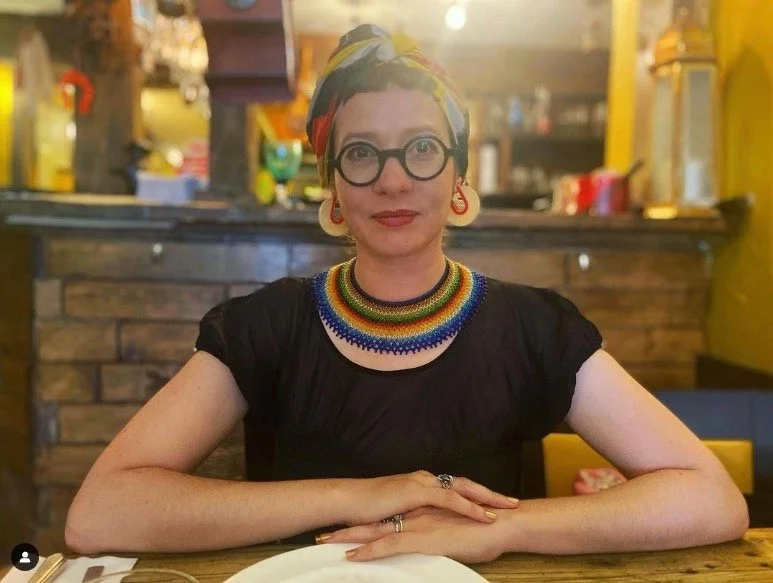
Selene States’ practice-based research into the radical history of women wearing—and making— the trousers revolves around a creative practice using home sewing patterns from the interwar period to explore modernist designs for everyday dress. Her work re-making historical patterns serves as a functional exploration of vernacular creativity and everyday craft, stretching the remit of the original avant-garde pattern blueprints to create a contemporary collection that celebrates the legacy of radical women makers and the scope and limits of their international influence and trade in forms and materials.
1. This reconstructed 1920s lounging pajama layers Bauhaus textiles, the history of readymades, and the reproduction and appropriation of forms to critique gendered hierarchies of art and craft, exposing erased female authorship within the design history canon. The scarves “appropriated” to make the “authentic” 1920s pajama pattern were themselves an appropriation by Collier & Campbell for Liberty of London of Bauhaus Weaving Workshop Master Gunta Stölzl’s 1927 masterpiece, Slit Tapestry Red Green—which became one of the British luxury textile house’s best-selling designs of the 1970s. By conflating this history and patterning transformation over time, the work highlights the erasure and dismissal of women’s authorship in fine art contexts and the exclusion of women at the Bauhaus from prestige disciplines like architecture and fine art.
2. The "jazzy" ensemble is imagined as a ‘dance pajama’ worn on the ballroom floors of the Harlem Renaissance. While modern white swing dancers in Britain imitate this vintage aesthetic, their nostalgic performances "whitewash" the dance, erasing African-American origins. The pajama utilizes an African wax print, or "Dutch Hollondais," a textile that serves as an international symbol of Black pride. It explores the jazzy textile’s history of cultural appropriation and code-switching—in how the garment “passes” both as white—a historical Art Deco design—and black—contemporary streetwear jumpsuit—how the syncopated rhythm of geometric abstraction in Art Deco aesthetics was heavily influenced by Jazz music and the “primitive” African artworks plundered during the colonial era. The work also engages with the print’s hybrid origins along colonial routs and the transatlantic slave triangle, tracing its journey from Indonesian batik traditions to machine-made Dutch factories, and finally to West African markets traded by "Nana Benz" women. By weaving these threads together, the garment examines the entanglement of the textile industry with colonial extractivism and transatlantic slave trade.
3. The “Anni Albers” ensemble interprets historical patterns as a “blank canvas” to bridge interwar design and contemporary sustainability. This two-part work—a silk pajama and a “rainbow” woven wrap—uses natural dyeing and zero-waste cutting to untangle Bauhaus narratives. Embodying the principle that form follows function, the pajama adapts the bias cut to emphasize the body’s anatomical geometries. The colour-harmony wrap translates the “fading” history of the Bauhaus’ design legacy during the Nazi period through a zero-waste pattern from Bauhaus Journal Die Neue Linie. Informed by Paul Klee’s colour harmonies and Anni Alber’s method of building colour into textile structure, the collaboration with Wilde Studios translates a painted structural grid as colour score, guiding the dye production and weaving practice. The use of “fugitive” natural dyes is central to this translation of the past; their tendency to fade over time serves as a metaphor for the shifting historical memory and erasure and displacement of foundational ‘degenerate’ artists of the Bauhaus during the Holocaust.
Selene States is a visual artist and educator working across textiles, fashion, and fine art. She explores how historical patterns, images, and crafts carry across time and cultures. As a cultural translator, she approaches the past as a foreign country to critically refract contemporary nostalgia for ‘simpler times.’ Her practice focuses on how familiar motifs, especially those tied to the home and women’s work, shape shared experience. For her research at the Bauhaus University, she created a series of women’s pajama ensembles inspired by historical fabrics and home-sewing patterns, highlighting the creativity found in domestic craft. By carefully recreating garments from the past, she invites viewers to rethink the boundaries between art and craft and to see fashion as cultural knowledge.
Artist: Selene States
Artist bio
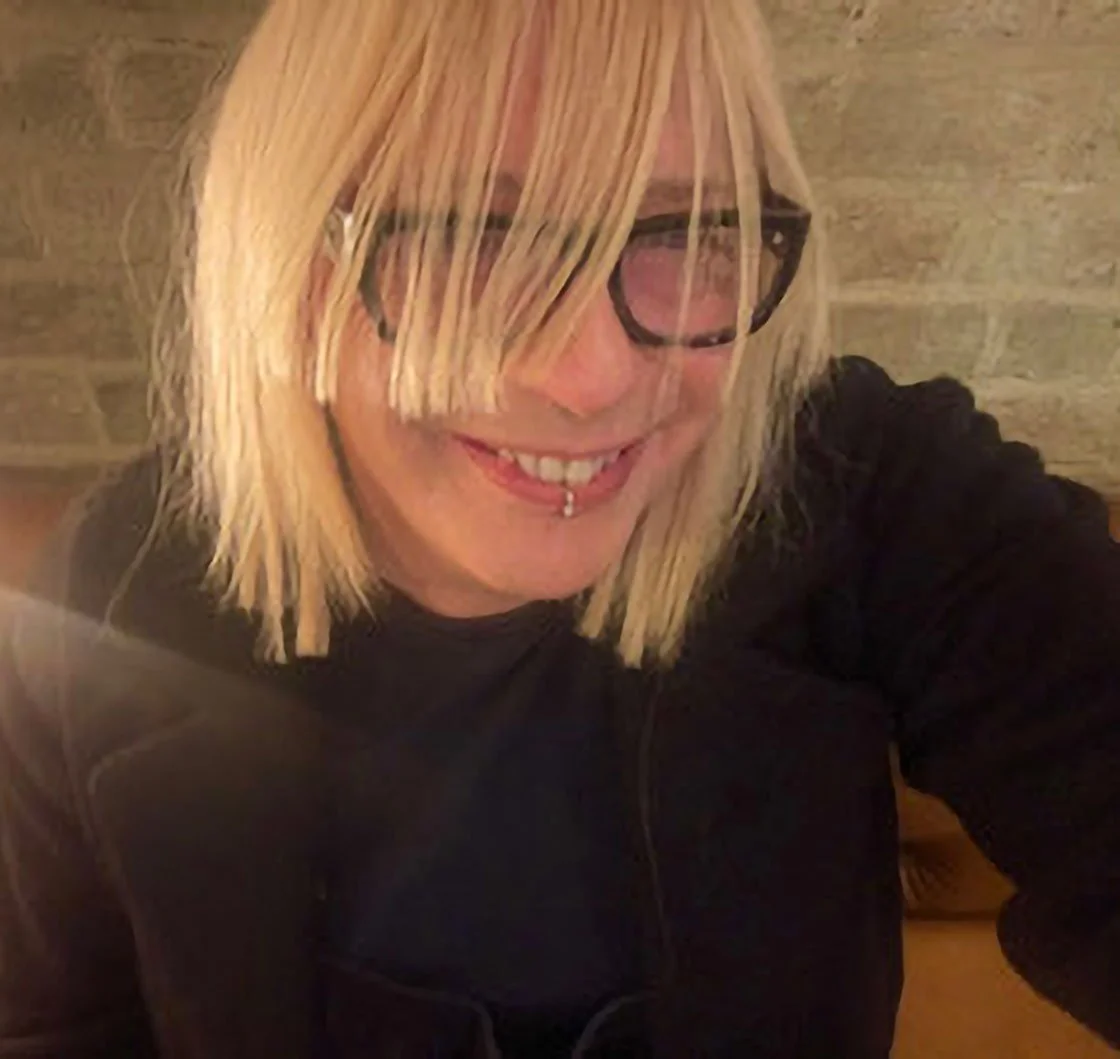
For the Generator, in line with the large-scale fabric pieces in my practice, I have created a 30-metre fabric-based performative installation titled We dreamed of a day like this, featuring a bow to mark the regeneration of the space for the grand opening. Frayed edges represent renewal, regeneration, and the movement from emptiness to reoccupation.
Artist: Raisa Watkiss
Raisa Watkiss’s conceptual practice deeply explores liminality, the coaxial effort to explain her mental illness and past traumas, and the struggle with shame and guilt through the examination of nostalgia. recognised for using her personal experiences with mental health—including anxiety and compulsive ritualistic behaviours—as a catalyst for her creative practice. Her work spans multiple disciplines, such as ceramics, film (notably Super 8 and 8mm), and performance. Key themes in her practice include mental health exploration: she visualises invisible psychological states, often describing herself as exploring the "trauma of mental illness" from the perspective of a "lunatic". Her doctoral research at Loughborough University investigates British lament poetry (AD 600–1400) and the concept of liminal space as a way of understanding contemporary mental health. Ritual and objects: she creates "anti-psychiatry" tools and examines ritualistic behaviours to ease psychological distress.
Winner of the annual writing prize, The CASS London
Winner of the 2023 National Graduate prize, London.